A SOMEWHAT GENDER NEUTRAL PROTAGONIST
Quietly masculine
When Pokémon became a popular sensation, everyone became familiar with Ash Ketchum, to the point that the name Ash has become inextricably linked to the character. But, as a localization choice for the United States in the late 1990s, that was a very unusual choice of name.
Although the name Ash has a long history as a masculine name, in the United States at the time, it was strongly considered a nickname for girls named Ashley, which had a peak of popularity as a baby name in the mid-1980s. When the anime came out in the United States, there happened to be many, many ten-year-old girls going by the nickname Ash.

I remember a lot of parents being confused by the idea of a male character being referred to as Ash.
As an aside, it seems that the character has turned the tables on the idea of Ash being strictly a girl's name. Ever since around 1998, after the localized anime came out, Ash has gained traction as a name for boys in the United States.

This choice of a name is so strange, I wonder if it was on purpose, for the very reason of giving the protagonist a gender-neutral name.
Even though there was no option to play the Generation 1 games as a female protagonist, and even though video game marketing in the United States at the time wanted to specifically target boys, it seems some effort was made by the localization team to de-emphasize the player character's gender. Beyond this default name option being considered valid for both boys and girls, we can see from leaked backups of the Red & Blue localization text that there were changes made to specifically adjust language referring to the protagonist, such as the masculine boy
, sonny
, guy
, or dude
to more gender-neutral language like kid
or brat
instead.


I wonder if this was an intentional goal of the localization effort to make the protagonist a bit more gender-neutral where and when possible, rather than choosing to assert specifically his maleness. The localization team could not do something like add a whole new character to the game, but they did have power over the word choices favored by the translation. I am also not sure if this would have been the corporate direction of Nintendo of America, or if it was a personal goal of the contracted translator Nobuyuki "Nob" Ogasawara, who has at other times said that he would have wanted to make the translation of the Pokémon games as inclusive as possible. ✽︎
Before deciding on the name Ash, the protagonist of the anime was referred to with the beta name of Casey, and this name also has a bi-gender quality.

In the United States, Casey is not very common as a first name, but it had a small burst in popularity during the late 1970s, through the 80s, and into the 90s when the Pokémon franchise was being localized. Also, at the time, Casey was considered equally valid as a masculine or as a feminine name.
Remember that the suggested name of the rival in one game is the suggested name for the protagonist in the other game. So, having a bi-gender name might have also been a consideration for the rival's beta name Bailey.

Similarly to Casey, the name Bailey had a small burst of popularity in the United States right at the time when Pokémon was being localized, and it was also considered valid as either a masculine or feminine name.
Ultimately, the same did not hold true for the finalized name Gary.

The name Gary was well past its peak of popularity (which was in 1952), of dwindling relevance, and strongly associated masculine — while some female babies born in the United States have been named Gary, it is a relatively tiny portion, and that part of the chart had completely fallen to zero by 1998.
I wonder if this means that other considerations ended up being deemed more important for the rival's name. It seems that there was an effort to preserve the link these names had in Japanese to Satoshi Tajiri and Shigeru Miyamoto, and going with the name Gary is a really clever way to retain that connection, even if it isn't a gender-neutral name. And, although the rival in one game is the protagonist of the other, the anime shows Ash as the hero, and Gary is solidly his rival and an antagonist. The rival in the anime doesn't need to have the most universally relatable name — in fact, it is better if it's a name that is a bit less relatable. The rival in the anime isn't meant to be you, he's an annoying guy you know. 💡︎
If I am right that the name and presentation of the protagonist in the localized games was meant to be a little bit gender-neutral, perhaps the idea was a tiny bit like the gender-ambiguous approach to the character of Link from The Legend of Zelda, especially as it was in Ocarina of Time (1998).
Back during the Ocarina of Time days, I wanted Link to be gender neutral. I wanted the player to think Maybe Link is a boy or a girl. If you saw Link as a guy, he’d have more of a feminine touch. Or vice versa, if you related to Link as a girl, it was with more of a masculine aspect. I really wanted the designer to encompass more of a gender-neutral figure. So I’ve always thought that for either female or male players, I wanted them to be able to relate to Link. [...] As far as gender goes, Link is definitely a male, but I wanted to create a character where anybody would be able to relate to the character. So that's why I think the rumor went around that Link could be a female. Because maybe the users were able to relate in that way.
Both Link and the main character of Pokémon Red & Blue are silent protagonists that the player is invited to consider as an extension of themselves while they are on their own adventure. Even though both Link and the main character of Pokémon Red & Blue are canonically male, these gender-neutral localization choices reduce the chance of unnecessarily breaking the immersion for players who do not identify as male.
I know, I for one, appreciated these considerations — I remember back when I was a kid playing Pokémon that I could sometimes forget that the main character is intended specifically as a boy. I could sometimes think, just like Satoshi Tajiri, He's me
. ✽︎
Notes
- Woe betide those whose little brother is named Gary. XD
- Apologies once again to anyone named Gary.
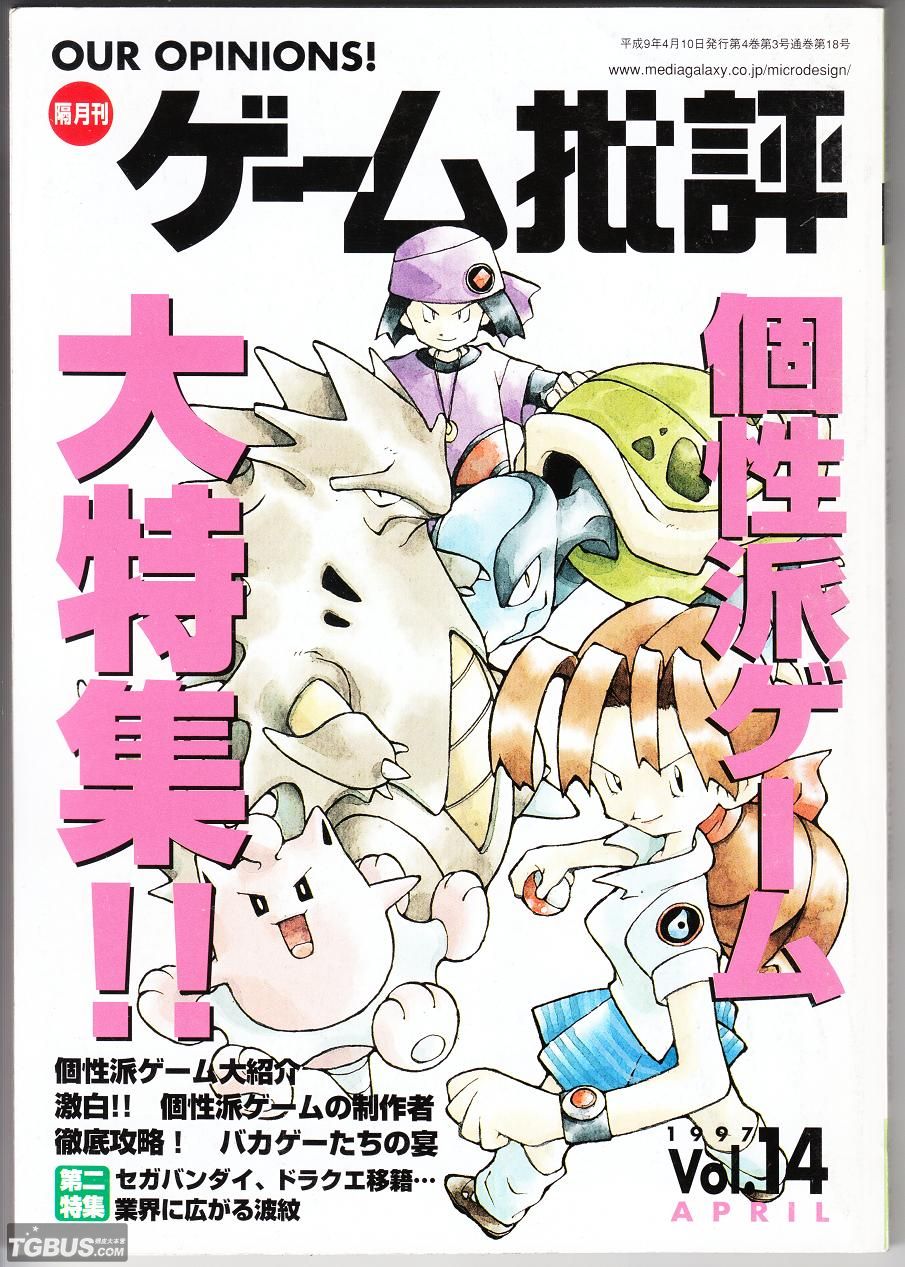
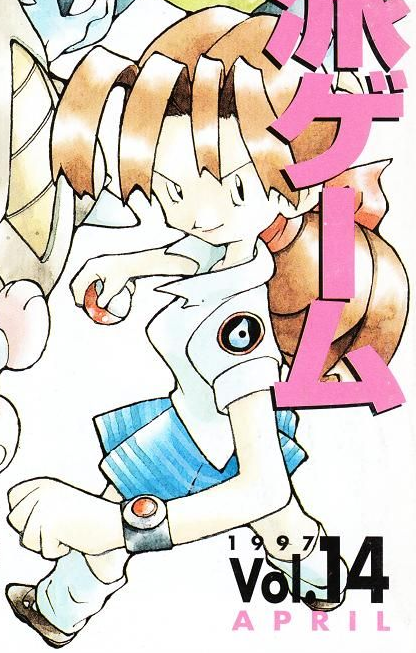
- I decided as a little girl that I wanted to grow my hair long, and I never regretted that decision. But, at the time, I encountered a lot of social pressure to cut or dye my hair. And, at the time, I didn't know of many characters with long brown hair that I could identify with. So I was extra attached to the mysterious girl in the illustration for her long brown hair!
- There has been some scholarly debate about how Ishihara claims to have seen a boobatious Pikachu redesign while Iwata claims to have seen a muscular Pikachu redesign, and that's contradictory. However, as we see on the Charizard redesign, at least three artists were involved, and they ultimately created at least four very different takes on Charizard. There might have been a similar process for a Pikachu redesign, with at least one boobatious take and at least one muscular take, not necessarily by the same artist, and one was most memorable for Ishihara, and the other was the most memorable for Iwata.
-
If this really was a factor for Red & Blue, don't know if or how it might have impacted the default name suggestions for Pokémon Yellow. The suggestion of the name Yellow has more letters, but I don't know if the names were handled in the same way at all. Pokémon Yellow came later, and it had many changes and bugfixes from the earlier installments. In Yellow, the Old Man trick is no longer possible to pull off, and the glitch
'Mdoes not exist. -
Alternating red and green for 6 pixels wide, blue for 5 pixels wide, and yellow for 4 pixels wide
-
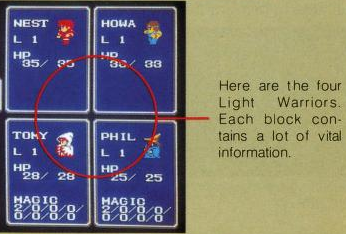 I think these names are awkwardly based on: Nester (the mascot of Nintendo Power magazine), Howard Phillps (creator of Nintendo Fun Club News) and... possibly Tomy the toy company, for its licensed Mario merchandise?
-
- Red/Green (1996)
- Blue (1996)
- Yellow (1998)
- Gold/Silver (1999)
- Crystal (2000)
-
Japanese publishers don't like taking risks, [Victor Ireland of Working Designs] says. Even when a North American publisher promises to take on a game's financial burden, a publisher is afraid of losing face in the result of a failure or poor performance.
-
Mr. Mime is the only Pokémon to have its English name changed between generations. Prior to Generation III, it was known as Mr.Mime, without the space.
Bulbapedia (Mr. Mime: Trivia) -
I was horrified by Mr. Mime because I Nostradamused that gender-specific naming would come back to haunt us forever more going forward.
Nobuyuki "Nob" Ogasawara (Twitter thread) -
Didn't get to do the all caps stuff (meaning move names, poke names, places, NPCs, etc. etc.) until around Gen 3 because my [Nintendo of America] handler was convinced he had a better handle on things. Which is why there were howlers like Slowbro being a "Hermit Crab Pokemon" and [Azurill] becoming a "Polkadot Pokemon." Oh, and fucking RAGECANDYBAR.
It used to drive me bananas that they'd pay me to translate, and then refuse to reason with me over issues like that.
Nobuyuki "Nob" Ogasawara (Something Awful forum archive (pseudonym Doug Dinsdale)) -
The biggest challenges were time and character/text limits for much of the text. Because of the text boxes you had a very limited number of characters you could use sometimes, and therefore had to take some liberties with abbreviations and even make some stuff up to the best you could to make things work.
Justin Berenbaum, regarding the localization of Breath of Fire II from 1995 (The Localization of Breath of Fire II) -
One day a few other Capcom folks came into my office and said “we need help”. They held a stack of paper (don’t remember exactly how many pages but it was huge, we joked it was 1,000 pages) that was literally the raw translated text from Breath of Fire II. It was a straight literal translation. [<...>] I’m not sure what translation company was used to translate the original Japanese text/script into English.
I was asked to do my best to make it into conversational English in 3-4 weeks. It’s a good thing I didn’t have much of a life at the time because I sat and played through the build while reading the script and made notes, edits, and adjustments the best I could as I played the game. [...] I often spent 4-6 hours a night after working 8 to 9 hours during the day, playing through the game and making notes on the printouts. Let’s just say mistakes were made.
Justin Berenbaum, regarding the localization of Breath of Fire II from 1995 (The Localization of Breath of Fire II) -
There was so much going on in the industry at the time. Congressional hearings, lawsuits, attempts to ban video games or hide them in the back with porn (seriously, before E3 all of the game company booths were downstairs at CES next to all the porn booths).
Justin Berenbaum, regarding the localization of Breath of Fire II from 1995 (The Localization of Breath of Fire II) -
Capcom USA had this really weird aversion to using Japanese art on box fronts and ads. There was a lot of pressure from sales to not appear to be "too Japanese." As a result, almost every Capcom box cover throughout the 90s was created by Moore and Price Design Group, a marketing agency based in the Bay Area. [...] Moore and Price was trying to take the artwork coming from Capcom Japan and "American-ize" it for the US market [...] Personally, I disliked this style and made a lot of noise about it while I was there.
Chris Kramer, regarding the localization of Breath of Fire II from 1995 (The Localization of Breath of Fire II) -
At one point, I noticed Isao [Kanamori] was struggling with a huge ream of paper and asked what he was up to. Turned out he was translating and checking the entire script and dialog for the first Breath of Fire using a Japanese to English dictionary. I offered to help as I had some writing experience and spent the next couple of weeks checking hundreds of pages, making suggestions for grammar and localization changes, offering a few bad jokes and trying to squeeze everything into a challenging character limit for each dialog box. We had a huge amount of raw text with zero context [...], nothing but pages and pages and pages and words and words and words.
Chris Kramer, regarding the localization of Breath of Fire from 1994 (The Localization of Breath of Fire II) -
Kids play inside their homes now, and a lot had forgotten about catching insects. So had I. When I was making games, something clicked and I decided to make a game with that concept. Everything I did as a kid is kind of rolled into one–that's what Pokémon is. Playing video games, watching TV, Ultraman with his capsule monsters–they all became ingredients for the game.
Satoshi Tajiri (The Ultimate Game Freak) -
When you're a kid and get your first bike, you want to go somewhere you've never been before. That's like Pokémon. Everybody shares the same experience, but everybody wants to take it someplace else. And you can do that.
Satoshi Tajiri (The Ultimate Game Freak) -
Pikachu is like the name of the species. But each player can name their own Pikachu. So kids can relate to it more. They get more attached to them that way.
Satoshi Tajiri (The Ultimate Game Freak) -
I wanted to name the frogs, because I watched them grow, but there were too many. [...] Like Nyoromo [Poliwag]. It looks like a tadpole. There's little whirls on it because I remembered that when you pick up a tadpole, you can see its intestines because it's transparent.
Satoshi Tajiri (The Ultimate Game Freak) -
Tajiri's father tells me the other kids used to call Satoshi
Dr. Bug
as a child. -
TIME: The main human guy is named Satoshi. That's your name. Is he your alter ego?
Tajiri: Basically, he's me when I was a kid.
Satoshi Tajiri (The Ultimate Game Freak) -
TIME: [The protagonist's] main rival is named Shigeru. That's the first name of Miyamoto, the famous game designer at Nintendo who did Donkey Kong, Super Mario Bros. Do you consider him your rival?
Tajiri: No! I really look up to Miyamoto-san. In the TV series, Shigeru is Satoshi's master. In the game, they are rivals. Shigeru is always a little bit ahead of Satoshi.
TIME: Does Satoshi ever catch up with Shigeru?
Tajiri: No! Never!
TIME: Have you caught up with Miyamoto-san?
Tajiri: I think very highly of him. I'd memorize each piece of advice he gave.
TIME: But Pokémon is more popular than anything Miyamoto-san has done. Hasn't the student passed the teacher?
Tajiri: No, because Pokémon was made with Miyamoto-san's advice. Since I was a teenager, playing Donkey Kong, he's always been my role model. He's a mentor for my heart.
Satoshi Tajiri (The Ultimate Game Freak) -
It's interesting, because in Japan, everybody goes for Pikachu. In the U.S., the characters Ash and Pikachu are grouped together. American kids seem to like that. In America there are more products sold with Ash and Pikachu together, not just Pikachu alone. I think Americans actually understand the concept of Pokémon better than the Japanese. The Japanese focus on Pikachu, but what I think is important is the human aspect—you need Ash.
Satoshi Tajiri (The Ultimate Game Freak) -
And then I remember we had other names for Téa and Tristan, and I believe it was The WB that came back — we had more generic names like Sally and Sam or whatever, and they wanted something more, um, exotic. So, The WB was giving us notes on Yu-Gi-Oh too, it wasn't just — you know, we weren't just able to do whatever we wanted...
Matthew Drdek (4Kids Flashback - Episode 17) -
And then I remember we had other names for [Yu-Gi-Oh characters] Téa and Tristan, and I believe it was The WB that came back — we had more generic names like Sally and Sam or whatever, and they wanted something more, um, exotic.
Matthew Drdek (4Kids Flashback - Episode 17) -
So, The WB was giving us notes on Yu-Gi-Oh too, it wasn't just — you know, we weren't just able to do whatever we wanted...
Matthew Drdek (4Kids Flashback - Episode 17) -
I thought of the slogan,
The game begins when you select your cart!
, and at the beginning, we actually created models for three colors: Red, Blue, and Green. Ultimately we whittled that down to just two versions, and it looked like it was going to be Red and Blue, but we thought Venusaur (Fushigibana) was so well-done, we ended up releasing Red and Green instead. -
This is the comic that most resembles the world I was trying to convey.
Satoshi Tajiri (VIZ Kids website for Pokémon Adventures, circa 2000) -
I want every Pokemon fan to read this comic!
Tsunekazu Ishihara (VIZ Kids website for Pokémon Adventures, circa 2000) -
However, implementing the nickname system meant we'd have to reduce the number of Pokémon you could collect [...] down to 30. And yet, people really wanted to nickname their Pokémon. So we gave up on having more than 30 Pokémon — but at the last minute, Mr Miyamoto from Nintendo said he'd gift us the RAM needed to include lots more Pokémon.
Satoshi Tajiri (Satoshi Tajiri Talks Red & Green's Development) -
I don't tend to focus on technical capabilities when I'm designing a game, as it's not the technical capability that gives a game its charm. However, that's the part of making games that I'm the worst at, because if the technical capabilities aren't there, the thing I really want to make just isn't going to be possible.
Satoshi Tajiri (Satoshi Tajiri Talks Red & Green's Development) -
We also considered having each game generate a random ID number the first time it was booted up, and that number would determine which Pokémon appeared in the game. But that was just an early idea.
Takenori Oota (Satoshi Tajiri Talks Red & Green's Development) -
The shape of a forest, the Pokémon that appear - I wanted to make a game that would be different for everyone, but it was difficult.
Satoshi Tajiri (Satoshi Tajiri interview - November 1997 issue of Famimaga 64) -
The ten staff members tried their hardest to dream up characters. We had portioned out the work and appointed programmers, graphic artists, and planners, but everyone contributed outside of their field. The game was made up of everyone's ideas.
Ken Sugimori (Game Freak Staff Interview: Creating the Game) -
Some staff members left and new ones joined in the process, so the only three who were here from beginning to end were me, Masuda, and Sugimori. The other members gradually joined in over time. We ended up with about twenty staff members in the end, as it ended up being a pretty big project.
Satoshi Tajiri (Satoshi Tajiri Talks Red & Green's Development) -
At the time, I figured that since they were monsters, they should have a tough look, but midway through I thought, ‘I'd like some cute ones, too.' There weren't many designers in the company at the time and I was doing most of it, and since I was designing from the perspective of a man, I hadn't thought of creating a cute Pokémon. That is why I asked some of our female staff, like Nishida, to join.
Ken Sugimori (Pokémon.com - Creator Profile: The Creators of Pikachu) -
To bolster the concept that you don't just battle Pokémon but collect and trade them as well, we had to make trading Pokémon more interesting. What kind of Pokémon would a player want when making a trade? Not everyone looks for the same thing, meaning you have to have a lot of variation. [...] and after considering all these variations, I thought, ‘We need more cute ones.'
Ken Sugimori (Pokémon.com - Creator Profile: The Creators of Pikachu) -
Did you receive any orders when creating Pikachu?
Nishida: There were no specifications other than gameplay ones, such as it had to be Electric-type and that it would evolve twice. I designed Pikachu and Raichu [and the scrapped third evolution "Gorochu"] based on that.
Sugimori: Weren't you told to make it an Electric-type Pokémon and to make it cute?
Nishida: No, I wasn't.
-
We were discussing whether it would be better to have three save files or to be able to name all 151 of your Pokémon, and everyone was unanimous in saying "It's better to be able to name them all!"
Ken Sugimori (Game Freak Staff Interview: Creating the Game) -
Junichi Masuda: [...] A player can express their own individuality by deciding which moves they teach their Pokémon. It's something we came up with so players would feel like their Pokémon are their friends and their Pokémon.
Was letting players nickname their Pokémon another thing you came up with to help reinforce that feeling?
Masuda: That's right. Nicknaming was an idea we had from the very beginning.
Ken Sugimori: We had to decide: Is it better to let players create three save files, or be able to nickname all 151 Pokémon? Everyone agreed: Let them nickname every Pokémon!
So it's more important to have an attachment to your Pokémon.
Masuda: Absolutely.
-
Tsunekazu Ishihara: [...] But we missed the end of year sales season and finally released the games at the end of February of the following year - the very worst time of year to release games!
Satoru Iwata: What's more, at that time there was this slight sense in the air that the Game Boy system might have reached the end of its shelf life, wasn't there?.
Ishihara: That's why I had this feeling that perhaps we were going to miss the last train. (laughs) After all, we'd dragged it out until the very end of the system's lifespan.
-
It really took us that long to get to a point where we could release [Pokémon Red & Green]. Near the end of development, we started to get really worried because we were [developing it for the] Game Boy. At the time in Japan, the Game Boy had been on a decline. You didn't really see so many people playing it out and about at that point. Even when we were talking to our friends in the industry and saying that,
Oh, we're working on a Game Boy game,
they were like,Really? You're working on a Game Boy game? That's not going to sell very well, don't you think?
That's kind of what the atmosphere was like in Japan at the time. -
Obviously a lot of new players are going to be going through this Kanto adventure for the first time [in Let's Go Pikachu and Let's Go Eevee]. We wanted to make it so the overall structure is similar, so people who played the original games could give advice to these younger players on the adventure about what to do next.
-
Yes, the English version has been released in red and blue! In Japan, the blue version was a rare version limited to mail order, but why did it become blue instead of green? Let's talk to the stakeholders!
Red and blue are the colors of the American flag, so they are popular colors for American people. So I made the English version a blue version, not green.
Hmm, that's what it is. Indeed, the flag is a blue, white star sign, red and white line. Is it a national thing?
Firefox translation of Pokémon Journal: January 1999 -
[In the English version of Pokémon Red & Blue] the graphics are blue, the data is red and green... it's a complicated story.
Ken Sugimori Firefox translation of Pokémon Journal: January 1999) -
Originally, it was kind of based on how people feel about and view different colors. The clearest split for us was between red and green but when we started thinking about abroad, it was clear that wasn't the case. In America in particular, it's red and blue that are considered
opposites
, if you will.Junichi Masuda Retro Gamer interview -
![This is the character I made for this cover, thinking that it would be like this if it was a three-way match with the three [starter Pokémon].](https://www.rigelatin.net/staircase/images/pokemon/tweets/strategy-guide-girl.png)
Ken Sugimori's tweet: This is the character I made for this cover, thinking that it would be like this if it was a three-way match with the three [starter Pokémon]. -
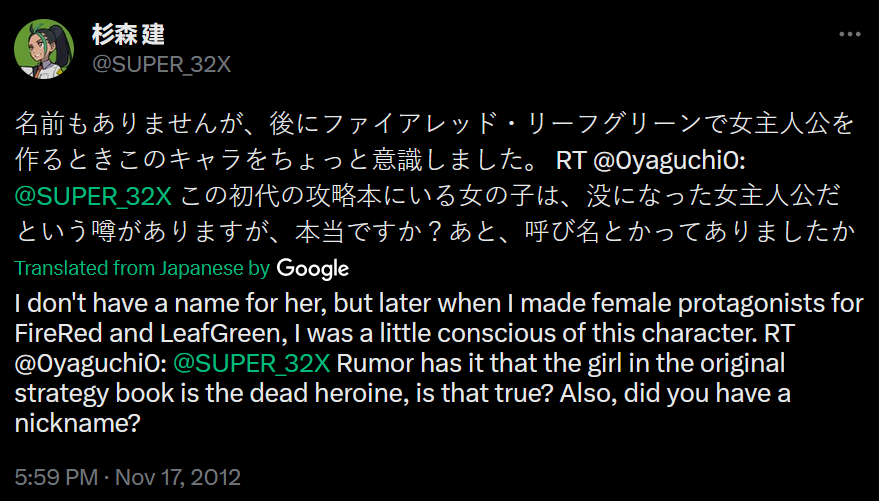
Ken Sugimori's tweet: I don't have a name for [the girl on the cover], but later when I made female protagonist for FireRed and LeafGreen, I was a little conscious of this character. -
A female trainer drawn by Ken Sugimori between Generations I and II. -

Ken Sugimori's tweet from Jun 17, 2016: There is colored paper for illustrations. Even if you erase it, it won't look too messy. -
- Red has been shown with Bulbasaur or Ivysaur and in different official artworks by Ken Sugimori.
- Red is paired with Venusaur in Let's Go.
-
- Red has been shown with the Charmander-line in different official artworks by Ken Sugimori.
- Red is paired with Charmander in the FireRed/LeafGreen Kotobukiya ArtFx J figurine.
- Red is paired with Charizard (which Mega-Evolves to the X form) in Pokémon Masters.
- We saw this pointed out by a tumblr post by maniacwatchestheworld (Apr. 18, 2023).
-
- Tumblr Post by cinnaquil (Oct 27, 2016)
- Tumblr Post by kash-phia (Oct 28, 2016)
- Twitter Post by @Aoiaoi8 (Oct 28, 2016)
- Tumblr Post by tiredveena (Oct 29, 2016)
- A design by chocogrotto posted to Twitter (Oct 29, 2016) gains a lot of popularity with the fandom.
- Tumblr Post by revolocities (Oct 29, 2016)
- deviantArt Post by KeithMontalbo (Oct 30, 2016)
- PokéCharms Post by nuclearsushi (Oct 31, 2016)
- A comic by Tumblr user rainyazurehoodie and a follow-up comic and another and another (Nov 6, 2016 - Feb 21, 2017)
- Tumblr Post by sakudrew (Nov 14, 2016)
- Tumblr Post by musubiki (Sep 27, 2017)
- deviantArt Post by Adolem (Feb 22, 2017)
- PokéCharms Post by nuclearsushi (Apr 27, 2018)
- Tumblr Post by musubiki (Mar 8, 2018)
- Twitter Post by 5igma1 (Jul 10, 2019)
- Tumblr post by makunezu (Dec 17, 2022)
- Tumblr post by marinecorvid (Sep 27, 2023)
-
- deviantArt Post by kawaiiinyan (Oct 30, 2016)
- A comic by Tumblr user rainyazurehoodie and a follow-up comic and another and another (Nov 6, 2016 - Feb 21, 2017)
- Well, that's sure dark.
-
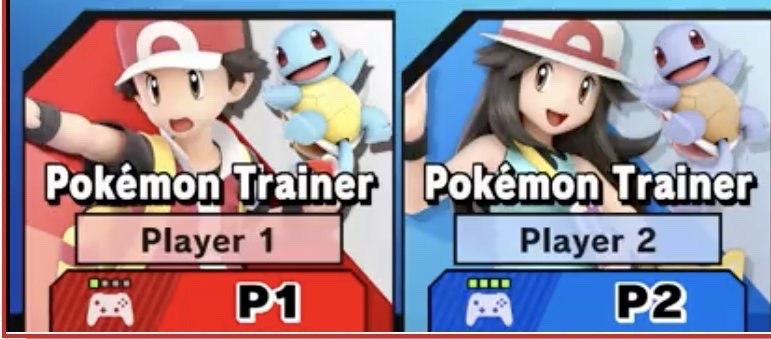
The only difference seems to be that the female character's Pokémon are somewhat different colors from that of the male protagonist's, which are the standard colors. This seems to have led the fandom to headcanon that the female protagonist from Kanto is someone with uncanny luck at finding shiny Pokémon.
- Tumblr post by musubiki - the female trainer from Kanto makes the boys envious of her luck at obtaining Shiny Pokémon. (Nov 12, 2018)
- Artwork by LILLIN on pixiv - Red riding his bike, the rival Green/Blue riding Pidgeot, and the female trainer from Kanto riding on shiny Charizard (Jan 29, 2021)
- Tumblr post by preciousleaflover - Red and Leaf riding their respective Charizards - Leaf's Charizard is shiny. (May 26, 2023)
-
- Tumblr Post by murkymuse - proposes that the protagonist is non-binary and genderfluid (Sep. 19, 2017)
- Nosepass Club: Whatever Happened to Trainer Leaf? - proposes that the assigned-female protagonist later becomes the male protagonist "Red", or, alternatively, playing the game as the female protagonist is a wish of the assigned-male protagonist (Nov. 13, 2017)
- Tumblr Post by infraredarmy - proposes that Leaf is Red after hormone therapy (Mar 3, 2019)
- Tumblr Post by blankeststateofmonsters - proposes that the protagonist is non-binary (Nov. 6, 2022)
-
- Tumblr Post by fullmoonisle - treating the character from Let's Go and FireRed/LeafGreen as the same. (Mar 31, 2023)
-
- Tumblr Post by southrobin - a drawing of the protagonist of FireRed/LeafGreen in Elaine's outfit. (Jan 25, 2020)
-

Ken Sugimori's tweet from Jun 20, 2018: Looks like [she'll] be in Smash Bros.. -
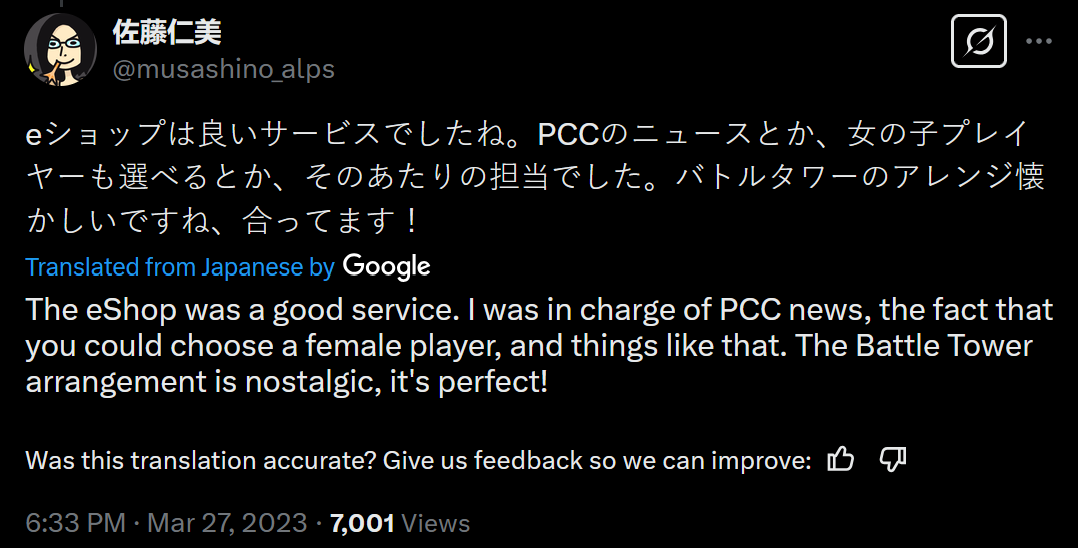
Hitomi Satō's tweet from March 27, 2023: I was in charge of [the Pokémon Communication Center News Machine], the fact that you could choose a female player, and things like that. -
- Bulbapedia Talk Page for "Leaf (game)"
- a thread in the Serebii.Net Forums (started Nov. 8, 2009)
- deviantArt post by MirakuruNaito (Jun. 8, 2023)
- Tumblr post by sapherin (Sep. 11, 2023)
- This was proposed up in a thread in the Serebii.Net Forums (mentioned Aug. 15-17, 2013).
- This came up in a thread in the Serebii.Net Forums at the time (mentioned Nov. 11, 2009).
- That way, there would be no conflict with Generation II because Cerulean Cave was closed in those games (due to space limitations), and we could believe that she had been there all along. And it would be a nice parallel to have both former protagonists have their cameos inside the two post-game caves. (Note that this was before the relevant news about the then upcoming Let's Go games... More on this topic later...)
-
- Tumblr Post by funtimefoxy - fanmade sprite of how she might have looked in Black 2 and White 2 (Oct 22, 2022)
- It would have really helped the naming situation if they had also made a Pokémon WaterBlue, even if it would have been kinda excessive...
-
- Rosy's defunct Pokémon fansite, Angeltower, started in 2004, specifically covered the release of FireRed and LeafGreen, and was last updated in 2010. Yet, she made no mentions of the playable characters of any games as having names, referring to them all as "the [male/female] character from [game]" (plus one mention of the rival as "Gary").
- Psypoke also covered the release of FireRed and LeafGreen at the time, and has no mention of any names for the protagonists.
- GameSpot: Pokemon LeafGreen Review (September 7, 2004) mentions that
you can now play as either a boy or a girl.
-
- Cave of The Dragonflies had a page for speculation about the upcoming games which included an image of the two protagonists, captioned:
Red and Green
.
- Cave of The Dragonflies had a page for speculation about the upcoming games which included an image of the two protagonists, captioned:
-
- pokemon group by Solla777 (Jul. 27 2005) and the final version of the same (Aug. 12, 2005) - no names mentioned.
- pokemon girl 2? by Solla777 (May 30, 2005) - no names mentioned.
- You wanted to battle by KaedeKarasuma (Apr. 18 2007) -
the female character/protagonist from the new Fire Red/Leaf Green versions. I personally named her Shina
.
-
- PrettyDarkMagicianGi commented on both Pokemon female trainer by Solla777 and Pokemon angst by Panda-Sama on the same day, Sep. 24, 2005, referring to the female protagonist as "Green" and the male protagonist as "Red" .
-
- Comment by Lexiness on Pokemon female trainer by Solla777 (Oct. 14, 2005) -
Blue girl!
. - Blue-chan by hermyone (May 14, 2008)
- Blue-chan by nurselorry01 (Dec. 21, 2008)
- The Starters and Blue by Renotata (Apr. 19, 2009)
- Pokemon Leafgreen - Blue by latsy (Jun. 20, 2009) -
i coloured it blue because her name is blue
.
- Comment by Lexiness on Pokemon female trainer by Solla777 (Oct. 14, 2005) -
-
The author's description says the story
follows the adventures of the FR/LG girl, named Ashley for the story
. The Author's Notes at the end of Chapter 1 say:Oh, this should probably be obvious, but Ashley [is the] FR/LG girl. Name's origins should be fairly obvious. [...] The male FR/LG character's actual name, in this story, is Ash though he prefers to go by Red. The 'color names' just don't seem very fitting, though Red works well enough in my opinion. Ash is just a commonly accepted name (likely due to the anime), same for Gary.
-
The author's description says
In the quaint village of Twinleaf Town, one girl begins her journey as a Pokemon Trainer, not knowing the friendships, evils, legends, and mysteries that await ahead. Leaf rises to the Pokemon League in her beautiful, vast home region of Sinnoh!
. So this is an alternate universe fanfiction where Leaf is originally from Sinnoh rather than Kanto. Perhaps the author was inspired by Ken Sugimori's illustrations of the female protagonist of FireRed and LeafGreen in the snow? -
The fanfic in question is My Starter by Fonkirby, first published August 2, 2009 (warning for lemon). The Author's Note says:
This story of mine takes place in the Fire Red/ Leaf Green games. The female trainer doesn't have an official name other then "Green" so I'm using the name I gave her when I played Leaf green
. Yet in the author's description, they denoted the story as shippingLeaf/Zangoose
. In this example, the author acknowledges the existence of the fan-name "Leaf", says "Green" is the official name, but opts to go with their player-designated name "Kiko" instead. -
By September 2009, the female protagonist seems to solidly be called "Leaf" by fans on FanFiction.Net, but the names of the other characters are a bit of a toss up...
- Red vs Leaf by The Blue Engine, first published September 27, 2009, names the male protagonist "Red" and puts the female protagonist "Leaf" in the role of Red's rival.
- Pokemon Fire Red Adventures by Animebolt, first published November 14, 2009, uses the names "Red", "Leaf", and "Blue".
- Inaudible Voice by AngelicWishmaker, first published June 1, 2010, uses the name "Gary" for the rival and "Leaf" for the female protagonist.
- Guardian's Oath by Ruddy OWLS, first published July 25, 2010, calls the characters "Ash", "Leaf" and "Gary".
- Pokemon Jouneys: A Kanto Adventure by ffgtakhfan, first published September 3, 2010, calls the female protagonist "Leaf", she's the twin sister of the male protagonist "Fire", and their friend is the rival "Water".
-


The fossils at the Pewter City Museum and the unidentified ghost haunting Lavender Tower are stored behind-the-scenes as Pokémon, even though they are not supposed to be real Pokémon that you can encounter normally or catch. Unfortunately they can be encountered as glitchy wild Pokémon by exploiting certain programming errors in the original games. -
Meowth346's list on Pokémon Forever included lots of Japanese for some reason. That list shows Oak's trainer class as
Pokémon はかせ
; that's Hakase, meaning "Professor". We're not sure if Meowth346 was working with the Japanese games when he did this extraction or what the deal was. -
Meowth346's list on Pokémon Forever shows Brendan with his trainer class as
しゅじんこう
: "Shujinkō" meaning "Protagonist". It also has his name written as asBrendon
(with an 'o'). We are not sure if this was accurately pulled from a different version of the game (perhaps the Japanese version?) or simply a typo on the website. - If anyone has an image of this historical teaser, we'd like to see it!
-
The earliest fandom example I can find of someone calling her "Fuguri" is this Wayback Snapshot (Oct 2007) of a Geocities JP site. The artist, Akuta, drew
Fuguri-tan
around 2006, together with a Gengar. It is interesting that the artist drew her with Gengar, since much later the female trainer from Kanto will be associated more officially with Gengar, so its inclusion in this artwork just a random choice that coincidentally later became more official, or is there some older reason to associate her with Gengar in particular? -
You see a lot of Trainers keep their Pokémon out of their Poké Balls on Pasio, right? I'm glad to be able to walk around with my Eevee, but it does worry me a bit... He's just too cute! Somebody might want to kidnap him! Or maybe a talent agent might want to make him a Pokémon model! Would that mean we couldn't be together anymore?! Oh no! Wh-where'd I put his Poké Ball?! I have to protect him!
Leaf in Pokémon MastersBy the way, Venusaur also gets to stay out of the Poké Ball on Pasio...
Walking along with a Poké Ball in my hand used to make me feel so confident. But being able to walk alongside my Pokémon all the time here on Pasio has blasted that confidence through the roof! My partner [Venusaur] and I are always looking out for each other!
Leaf in Pokémon Masters - "SUZI" is another one of the default names that Professor Oak might suggest for the female protagonist of FireRed and LeafGreen.
-
When asked to comment on the rumor that
The Subway Masters are 27 years old,
Junichi Masuda said,Eh, I don't think they've officially announced their age!!
- Regarding bugs in Red & Green that were fixed in Japanese Blue:
- Bulbapedia: Broken hidden items, for more information on a bug in Japanese Red & Green that was fixed in Japanese Blue.
- ChickasaurusGL on YouTube: Saffron Gym glitch, for more information on a bug in Japanese Red & Green that was fixed in Japanese Blue.
-
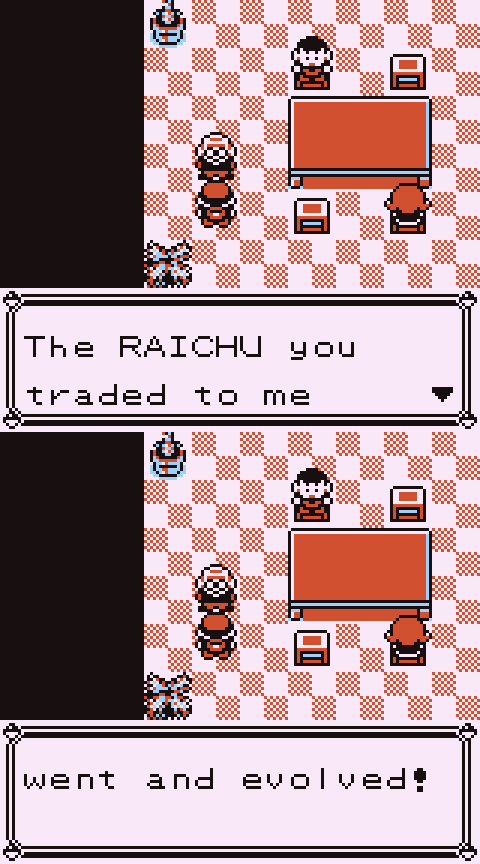
A famous oversight comes from merging the text of Japanese Blue, with the Pokémon locations of Japanese Red & Green. -
The way we've approached things is to develop whatever we want without paying any heed to how much memory is available, cutting down on Pokémon we can't fit in later on.
Satoshi Tajiri (Game Freak Staff Interview: Pokémon 2) -
NPC trainers were originally put into the games because at first you weren't able to complete your Pokédex without using the link cable to trade with your friends. But, then what would people without any friends have done? We decided to build at least a few friends into the game for them.
Satoshi Tajiri (Game Freak Staff Interview: Pokémon 2) -
I want to give the matter more serious consideration and create a game that doesn't pick on kids who don't have friends, but rather helps to increase the number of friends they do have. That's the play environment I'm aiming for.
Satoshi Tajiri (Game Freak Staff Interview: Pokémon 2) -
In the beginning, the original Pokémon didn't have different variations such as Red and Blue. I took the advice of Miyamoto and split it into two, something that was a first for us. This time [with Gold & Silver], I knew we'd have two versions from the start, so I wanted to make a game with clearer differences between the two releases than were present in Red and Green.
Satoshi Tajiri (Game Freak Staff Interview: Pokémon 2) -
In order to economize on memory in [Red, Green, and Blue], we made it so that if you were looking at a character from behind, it would appear out of focus in relation to the camera angle. Since we're now able to use more memory [in Pokémon Gold and Silver], things will be much clearer. Having twice as much memory doesn't necessarily mean that there are going to be twice as many Pokémon or twice as many maps.
Satoshi Tajiri (Game Freak Staff Interview: Pokémon 2) -
 In fact, it seems by the release of Gold & Silver, Game Freak needed to tone the resolution down again a bit.
- VideoGameJNPoop made a nice video comparison of all the PokéDex entries for Generation II.
- MandJTV made the original Ash and Red Rap Battle and shmollzAMV made an AMV version, both of which were widely viewed and shared at the time.
-
In this interview Ishihara and Tajiri discuss technical and cultural difficulties of localizing Pokémon Red & Blue for the United States. I haven't yet found a nice translation of the whole interview, but it seems that they discuss the difficulty in the number of letters needed for words and names in English vs Japanese, the history of poor sales of RPGs in the United States (they were told kids in the US wouldn't play games that involved reading ...sigh), and that Nintendo of America thought that the Pokémon designs were "too cute" for the US audience and they proposed certain changes that Ishihara found to be very upsetting.
-
When I first showed Pokémon to them, they told me it was too cute. The staff at Nintendo of America then suggested their own designs for the characters – I won't show those illustrations to anyone as long as I live, but they kind of looked like the characters from the Cats musical. So, for example, Pikachu was changed into a character shaped like a kind of a tabby cat with huge breasts. [The interviewer proceeds to ask whether the proposed design was
Tsunekazu Ishihara (Nintendo of America really did suggest giving Pikachu large feminine breasts at one point, Japanese media confirms)like those girls who do Pikachu cosplays at anime conventions.
] Yes, exactly, they presented that kind of design to us for real. I thought it was interesting, in a sense of appreciating such cultural differences. However, I didn’t want to compete in the [overseas] market with that kind of thing. -
I still remember it very vividly, when [Nintendo of America] saw Pokémon and said, something this cute can't be called a monster. Monsters should be muscular and more fearsome. And they sent me a picture of a muscular Pikachu. I remember thinking, there's no way we can show this to the people who made Pokémon. I remember this like it was yesterday, even though about 10 years have passed since then.
Satoru Iwata (Nintendo: Management Policy Briefing Session as translated on The Cutting Room Floor) -
[...] one of the most noteworthy differences being the player's name having ten characters, whereas in the final games this was changed to seven. This would have likely caused too many issues with dialogue boxes, as even here the Trainer Card info would spill out of the screen.
(The Cutting Room Floor: Development:Pokémon Red and Blue/Localization - System Text #1) -
When we were looking to expand Pokémon overseas, I can't forget what we were told. They said, something this cute can't be called a monster. They said if you want success in the American market you need to go with a muscular redesign, such as the one they sent us.
Satoru Iwata (Toyokeizai Online interview with Satoru Iwata as translated on The Cutting Room Floor) -
The president of Nintendo at the time, Hiroshi Yamauchi, told me, if there is no example [of a cute design like this] working in America, that's even more reason to give it a try. When it comes to entertainment, there is value to standing out from the rest. If something is unique and sees success, it has the potential to become really big. Go with the Japanese designs as is.
Satoru Iwata (Toyokeizai Online interview with Satoru Iwata as translated on The Cutting Room Floor) -
Johto Times: You have talked in previous interviews about changes the ad agency wanted to make to Pokémon so it might appeal better to Western audiences. One of the ideas floated was to give the games a baseball theme. What can you tell us about this, and/or any other concepts that were brought up during those early discussions?
Gail Tilden: As mentioned, we had a committee that would look at different ideas, and the marketing team had asked the ad agency to provide proposals. One idea was to use graffiti-style art that was a bit edgy – the theory was that the characters looked too young or too "Japanese" for western tastes. Since the key video game audience was seen as male teens, this style might be more inviting to them.
-
The localization was underway when I got involved. There was a team lead by Mr. Hiro Nakamura who worked directly with Game Freak to create English-language names that captured the same spirit. The task was huge, as they had to submit at least three concepts for each set of evolutions and explain the relevance – plus do legal trademark checking. [...] In the process, various names failed the test and that is why early materials [like the 1998 press kit] could have had a few earlier recommendations.
-
My personal contribution was the Poliwag, Poliwhirl [and] Poliwrath idea, as well as "Pallet Town" as the overarching name for colors.
-
Bill Giese, a former game tester who was called on to be an early localizer for Pokémon, recalls a manager saying that, when it came to the games, “It’s kind of a big deal over there [in Japan]. There’s no way it’s gonna sell over here [in the United States]. It’s the next Virtual Boy.”
(Monster Kids: How Pokémon Taught a Generation to Catch Them All by Daniel Dockery, Chapter 3) -
Translation duties would go to Nob Ogasawara, who was plucked from working on GamePro magazine to translate Terranigma, an RPG for the Super Nintendo that was never officially released in North America. Even before being given the assignment, Ogasawara had been aware of Pokémon, as he’d been sent tapes of the anime by a friend in Japan and eventually decided to buy the games.
I played it and was instantly charmed,
Ogasawara said, admitting that he put nearly 200 hours into them. [...] it was clear that his knowledge, talent, and enjoyment of the games made him the best fit for the job, though Ogasawara would later humbly call the eventsa series of unlikely, dumb circumstance.
(Monster Kids: How Pokémon Taught a Generation to Catch Them All by Daniel Dockery, Chapter 3) -
As part of the larger team working to bring the games to US audiences, Ogasawara would be responsible for traditional translation duties, but also removing
things like drunks, magic mushroom-taking, innuendoes about testicles,
and anything that might fly in Japan, but could earn them a slap on the wrist from the Entertainment Software Ratings Board elsewhere.(Monster Kids: How Pokémon Taught a Generation to Catch Them All by Daniel Dockery, Chapter 3) -
Also changed were the Pokémon’s names, a duty left mostly to Bill Giese, Sara Bush (then Sara Osborne), and other localizers who, according to Giese,
sat in a dark writer’s room
and would pitch ideas to one another about what each of the 151 creatures should be called.It was their duty to piece together a product that stayed true to the spirit that Game Freak had imbued it with while also turning it into something that Americans could grasp.
We had gotten info from Game Freak and they’d tell us the genesis of these creatures and what they meant and what they were inspired by,
Giese said. Then the team had to do their best to honor the origins of the monsters(Monster Kids: How Pokémon Taught a Generation to Catch Them All by Daniel Dockery, Chapter 3) -
Giese recalled that many times the technique would come down to
literally smashing two words together, writing it on the wall, and trying to say it fast and going, ‘Is that a word?’
If you were wondering, this is how they came up with names like “Cubone” becausehe wears a bone, he’s a cub.
(Monster Kids: How Pokémon Taught a Generation to Catch Them All by Daniel Dockery, Chapter 3) -
Giese’s love of pop culture helped him when naming Hitmonchan and Hitmonlee after Jackie Chan and Bruce Lee
(Monster Kids: How Pokémon Taught a Generation to Catch Them All by Daniel Dockery, Chapter 3) -
Gold and Silver’s localization had been an interesting one, especially considering Pokémon’s status as a known commodity, rather than a plucky underdog with little brand awareness in the US. Jeff Kallas, like his friend Bill Giese, had worked as a gameplay counselor before teaming up with the Pokémon team, and he found it to be a fun experience with some interesting rules. For example, in Red and Blue, two of the fighting Pokémon had been named after famous movie martial artists: Hitmonchan (as in Jackie Chan) and Hitmonlee (as in Bruce Lee).
This generation would introduce a new fighting Pokémon to go with them, Hitmontop. But that wasn’t the first idea for its name, as it was originally meant to follow the action star trend with “Hitmonjet.”
For Jet Li. And then someone in Legal caught on,
Kallas explains.They were more worried about people seeing the connection.
(Monster Kids: How Pokémon Taught a Generation to Catch Them All by Daniel Dockery, Chapter 8) -
There’s this episode [of The Simpsons] ‘Lisa’s Wedding’ where they go to this Renaissance fair in Springfield and Chief Wiggum has these medieval creatures that don’t exist, like the Esquilax. ‘It’s got the head of a rabbit and the body of a rabbit.’ And I thought it was funny, so I kept thinking, Esquilax, Esquilax, Esquilax and I don’t know why that stuck in my head. And so, with Snorlax, you have ‘snore’ and ‘lax.’ I literally put that there because I like that joke on The Simpsons.
Bill Giese (Monster Kids: How Pokémon Taught a Generation to Catch Them All by Daniel Dockery, Chapter 3) -
Sara Bush, who was also a game tester, had another memory of the creation of the Snorlax name, that it was a combination of the words “lackadaisical” and “snore.”
(Monster Kids: How Pokémon Taught a Generation to Catch Them All by Daniel Dockery, Chapter 3) -
The work involved a constant back-and-forth, not just between Nintendo of America and Nintendo of Japan, but with the licensor Shogakukan and Game Freak themselves.
(Monster Kids: How Pokémon Taught a Generation to Catch Them All by Daniel Dockery, Chapter 3) -
The games had been renamed Pokémon: Red Version and Pokémon: Blue Version, using the updates provided by the Japanese Blue version, while keeping the groupings of monsters found in Japanese Red and Green, respectively. The name and color change came thanks to the same Hiro Nakamura, who had been integral for the US team with localizing the games, and continued to be instrumental in figuring out how to ensure that Pokémon performed well across different markets.
It was his kind of experimenting with people and understanding that blue is the most popular color in America and that starting with Red and Blue would be better than starting with Red and Green. It wouldn’t matter in the triangulation of water-fire-plant which two led,
Tilden said of Nakamura’s work.((Monster Kids: How Pokémon Taught a Generation to Catch Them All by Daniel Dockery, Chapter 3)) -
The biggest hurdle for [Norman Grossfeld] and the 4Kids team would be selling the anime to the networks and getting through their
preconceived notions or their snobbery for Western-produced animation over something from Asia.
(Monster Kids: How Pokémon Taught a Generation to Catch Them All by Daniel Dockery, Chapter 3) -
What a fun time that was [...] We were talking about the town names and the importance of the town names and the fact that they represented colors and shades and hues. I’ve also painted for years and years, and I was like ‘It’s like the paint colors!’ So, we literally went to a paint store and we were looking at all those things.”
Sara Bush (Monster Kids: How Pokémon Taught a Generation to Catch Them All by Daniel Dockery, Chapter 3) -
In case it wasn’t clear yet, Ash Ketchum isn’t a direct translation of the character’s original name, Satoshi. Instead, it is a pun-based moniker that, once again, took advantage of the
Gotta catch ’em all
tagline. In fact, the catchphrase was invented as apositioning statement
by Grossfeld as a way tokeep kids engaged
while also just barely skirting Federal Trade Commission rules about directly influencing children through advertising. So while Ketchum was Grossfeld’s idea, the decision to change the character’s name from Satoshi to Ash was courtesy of Nintendo.(Monster Kids: How Pokémon Taught a Generation to Catch Them All by Daniel Dockery, Chapter 4) -
In case it wasn’t clear yet, Ash Ketchum isn’t a direct translation of the character’s original name, Satoshi. Instead, it is a pun-based moniker that, once again, took advantage of the
Gotta catch ’em all
tagline. In fact, the catchphrase was invented as apositioning statement
by Grossfeld as a way tokeep kids engaged
while also just barely skirting Federal Trade Commission rules about directly influencing children through advertising.(Monster Kids: How Pokémon Taught a Generation to Catch Them All by Daniel Dockery, Chapter 4) -
[...] the decision to change the character’s name from Satoshi to Ash was courtesy of Nintendo.
(Monster Kids: How Pokémon Taught a Generation to Catch Them All by Daniel Dockery, Chapter 4) -
Despite his reservations, Haigney joined the team and took on a role that he describes as
constant work.
Because he was unable to add lip flap movements, the dialogue had to match the character’s mouth on a syllabic basis.(Monster Kids: How Pokémon Taught a Generation to Catch Them All by Daniel Dockery, Chapter 4) -
Some documents, presumably between Hiro Nakamura and Game Freak, were included in Nintendo data leaks and quoted on The Cutting Room Floor. A lot of the communication mentions names
rejected by legal
orawaiting legal's approval
, with onewaiting for a reply from your company
. -
There were sometimes names needed for animation characters – I came up with the idea of using famous outlaws for the bad girl/guy Team Rocket teams Jessie and James, Butch and Cassidy, and Bonnie and Parker (this one may not have been used in this manner). These are first and last names split into two. It was also fun because Al Kahn [then CEO] of 4Kids had a daughter named Cassidy.
-
4Kids had been Nintendo's long-time licensing agency for brands like Mario, Zelda, etc. They were also excited at the prospects with Pokémon and what was happening in Japan. At that stage, 4Kids had a small production team focusing on kid properties and it was great that they could handle localization of the show.
- Check out the Leisure Concepts Inc. contact sheet for official Nintendo retailers
-
It was disappointing not to get clearance on
Catch 'em if you can!
, and we were in a teleconference with Norman Grossfeld of 4Kids, who suggestedGotta Catch 'Em All!
, which sounded catchy! It cleared and became a great tag line and a clever song. -
I only had the opportunity to meet with Mr. Tajiri once in 1998. He was very emotional about bringing his creation to the rest of the world. (The name Ash is intended to be a derivative of Satoshi).
-
[In the 1980s] localization wasn't what it is today, so just making sure all the games had an English-sounding name...
-
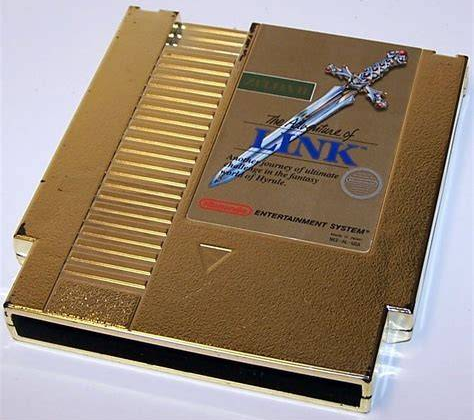
In fact, the first couple Zeldas being a new style of game for the US audience, weren’t that successful in terms of quantity sold [...] In their time, not meaning reissues of them now. [...] So we marketed it in a different way, with the gold package and the gold cartridge. And, you know, really tried to give this kind of royalty kingdom type of look. And so it was an expensive endeavor. And, of course, none of the parts or pieces could have been swapped or used in any other manner. And with the hole in the box, fitting with [...] seeing the gold inside, it was, you know, it was a major endeavor.
-
We did a TV commercial that’s kind of crazy [...] it's the first Zelda commercial, and it’s a crazy comedian in a padded cell. [...] He’s screaming. He says, Ahh, peahats! [...] when the agency pitched that there would be a stand-up comedian doing something about all the fun things in this game, we all said yes. So then I go to this shoot in Los Angeles, and it’s this crazy guy in a padded cell, and I’m like, [...] I can’t go through this, because this is not what we agreed to. This is not what we were expecting. We thought a guy standing at a mic in a spotlight. And so, we called the agency, we called back and to the executives, and they said to go ahead, maybe because we were there already but, very quickly after that, we did another Zelda commercial [...] called Zelda Rap, and [...] probably neither of them is very appealing.
-
Mr. Arakawa [the founder and then-president of Nintendo of America], he had a lot of belief that kids are kids anywhere, and that if a game is good, that the genre was less important.
-
And the two hottest selling franchises in Japan were Dragon Warrior/Dragon Quest and Final Fantasy, and we were missing out. We weren’t selling those games, and we wouldn’t be selling the future versions unless we could figure out a way to interest players. [...] So [...] we would give [Dragon Warrior] away with a subscription to Nintendo Power and it came with a [...] strategy guide, and that that way, that would get it in more people’s hands, they would have the information now in order to learn how to play, and it would help us move the RPG category forward.
-
Frank Cifaldi: It was, uh, not that great for me as a subscriber to get a new issue [of Nintendo Power] and it’s like, the only coverage is a game I don’t have. It’s like, oh, thanks.
[...]
Gail Tilden: Well, we wanted you to buy Final Fantasy and so that, actually–
Frank Cifaldi: [channeling his inner child] I don’t know what that is. What kind of game is that? I’ve never seen anything like this.
Gail Tilden: Right, exactly.
-
So after the Dragon Quest/Dragon Warrior offer, we did work with Squaresoft to try to get Final Fantasy introduced. And not only did we do this strategy guide, but in Nintendo Power we had to do coverage like every month for three or four months. And one of the best things about my job in publications and with Nintendo Power was that we really had almost complete autonomy. [...] When Final Fantasy was coming out, someone at Square came up to me, like, at CES [Consumer Electronics Show, technology trade show held in Las Vegas], I suppose, and said, Mr. Arakawa [the then-president of Nintendo of America] says you’re gonna put Final Fantasy on the cover. I’m like, I decide what I’m gonna put on the cover, you know? [...] But, in fact, Final Fantasy — not only that, we had to continue to push the game many months.
-
And in the end, what people now call LARPing, we had a thing where you won a trip to go to Tortola in the British Virgin Islands to experience a LARPing vacation. So, Scott Pelland from Nintendo Power, he went in advance and set everything up with, like, restaurants and other things so that it would be a complete experience. Then when they went back with the kid, who somehow the family let, like, the 20 year old brother, take the three 12 year olds to Tortola, then another one of our writers, Dan Oswen, had just gotten married, and so his wife went, and she was laying in a forest. I’m not sure what character lays in the forest in Final Fantasy and they did all the things that– kinda crazy.
-
Gail Tilden: So in January of 1998 I was asked if I would lead the team to bring Pokémon out of Japan to the rest of the world, other than China and Korea.
Frank Cifaldi: Another RPG, really?
Gail Tilden: Another RPG.
-
So prior to me getting involved that directly as, like, team lead, we had all seen the game: a black and white RPG on Game Boy with very Japanese characters and like, ugh.
-
And then our ad agency said, Could we just change the art and it’ll be like, gritty, and we’ll make like, um, you know, graffiti on the walls and stuff like that [...] There was also a thought like, [...] is the way that the game is formatted, could we make it that they’re all baseball players in a baseball league, and not like a Pokémon league?
-
And then our ad agency said, Could we just change the art and it’ll be like, gritty, and we’ll make like, um, you know, graffiti on the walls and stuff like that.
-
[Referring to the ad agency that Nintendo of America worked with] There was also a thought like, [...] is the way that the game is formatted, could we make it that they’re all baseball players in a baseball league, and not like a Pokémon league?
-
And as all this discussion and meetings were going on for a few months, Pokémon was heating up and heating up. Now there’s TV shows. Now there’s comic books. Now they get, you know, movies and more games and toys. And so finally, Mr. Arakawa said, Forget it. We’re just doing it. We’re doing it. And not only we’re doing it, we’re going to do it all. We’re doing the whole thing. We want control of the whole thing. And so we need all the rights gathered up in Japan, and we want all the rights given to Nintendo of America. And we had a licensing agency we worked with, which was 4Kids, and so we’re going to work with them, and we’re going to make sure that it’s done the way it was in Japan...
-
From the start, everybody was treating the project like it would flop. To make matters worse, our designs for the Pokémon were also deemed unsuitable for a United States audience. They kept saying it was all way too cute. In America, cute doesn't fly. It had to be cool.
Minoru Arakawa (Pokémon Story) -
The character design expert at [Nintendo of America] had a lot of things to say. Eventually I told him he didn't seem like much of an expert.
Minoru Arakawa (Pokémon Story) -
Graffiti art was on the rise in the US, so [Nintendo of America] contracted some artists who specialized in that style and tasked them with creating mock-ups for what they had in mind.
Minoru Arakawa (Pokémon Story) -
We decided that if we were going to do this, the only way to do it would be with the original designs.
Minoru Arakawa (Pokémon Story) -
Right around that time, the official anime had already started broadcasting in Japan, and Pokémon was starting to gain traction. At that point, the amount of work NOA would have too put into localization would have been enormous if they had gone with their original plan.
-
So the guy that can be credited for the localization, his name is Hiro Nakamura. He is the person who's responsible for all of the English names, and [...] he would have to submit three names, the names of each of the Pokémon. So let's say it's Charmander, Charmeleon, Charizard. He'd have to submit three groups of three and explain why they matched with the concept that was in Japan, and he was very diligent [...] he would canvas people, like, in game counseling or whatever, to make sure he was getting the right colloquialisms, etc. So anyway, you have him to thank for how well all of that turned out.
-
So the guy that can be credited for the localization, his name is Hiro Nakamura. He is the person who's responsible for all of the English names, and [...] he would have to submit three names, the names of each of the Pokémon. So let's say it's Charmander, Charmeleon, Charizard. He'd have to submit three groups of three and explain why they matched with the concept that was in Japan
-
[Hiro Nakamura] was very diligent [...] he would canvas people, like, in game counseling or whatever, to make sure he was getting the right colloquialisms, etc.
-
By 1999 it had taken off. It was a full-fledged phenomenon. We had moved the television show to Kids WB as a network. They were promoting it heavily, and we sold the movies to [Warner Brothers] as well, the first three.
-
Preset names function differently because they are stored one after the other in the game data, separated by the end of name marker, whereas custom names are succeeded by zeros after the end of name marker. In English Pokémon Red, the player's name is stored as
RED
, starting from the selected name; in English Pokémon Blue, the player's name is stored as<end> ASH <end> JACK <end> NEW NAME BLUE
, likewise starting from the selected name.<end> GARY <end> JOHN <end> NEW NAME - More information is on Bulbapedia:
-
According to The Cutting Room Floor, this is from a video shown at the 1998 E3 video games conference. However the citation and the source of this screenshot comes from what I think is a Mexican video game news television show. I think video game journalists at the time were provided footage to promote the upcoming games, and maybe that footage was the same as what was shown at E3, maybe? I've looked at various videos covering E3 1998, and while they show the Pokémon booth and some similar footage, I haven't yet found a definitive link between this
Satoshi
quote and E3 1998. -
We were worried that there hadn’t been all that many RPGs that were successes, particularly in the States. And an RPG with a somewhat younger skew, on Gameboy? We really thought the Gameboy side would be the weakest side for the franchise. Thankfully we were wrong. We had no idea the kids would go so crazy for it. It’s really meant a resurgence for the Game Boy hardware: ten years on and its selling better than ever.
Gail Tilden (Computer and Video Games: Interview with Gail Tilden) -
Chris: So what was Square's localization process like before you got there?
Ted: They really didn't have one. They had a person who spoke some English and she did her best with Final Fantasy II [the 1991 North American release of Final Fantasy IV], which was her game. [...] the senior VP and then the finance guy, they basically had spent some 24 hour blocks of time late into the evenings, trying to rewrite the text as best they could without ever having played the game. They found so many issues with the screen text when they started reading it, they figured they should take a shot at it.
Ted Woolsey (Player One Podcast - Episode 16: Lost In Translation) -
Nowadays, the Pokémon games have big localization teams that plan their global reach to provide the best balance of faithfulness and relatability — but that wasn't always the case. Before the long lists of regional translators in the credits of the most recent installments, most English versions of Pokémon games had only one credit for text translation: Nobuyuki "Nob" Osagawara, the man responsible for every bit of English text aside from Pokémon names in nearly every entry up to Pokémon Platinum.
-
Dogasu's Backpack: Up until XY, Pokémon games used to almost always start out with the professor asking "Are you a boy or a girl?" But from Pokémon Go onwards, the wording of this question was altered to be a bit more inclusive toward players who maybe don't identify as either.
Nobuyuki "Nob" Ogasawara: Damnit. I wish I was more aware back then.I missed an opportunity to help make the franchise more inclusive, and for that I'm sorry.
-
But when working on games, I’d typically start at 0900 and go to 2200 with meal breaks and maybe a dog walk for as many days as it took to finish. I’d usually never take days off, either. I don’t sleep well when there’s a project on anyway—it was better I just worked. I’ve done up to three months of this hermit-machine existence on multiple projects. So, like, crunch? Whassat? ‘s it tasty? No, it isn’t healthy and it’s not a lifestyle I recommend.
Nobuyuki "Nob" Ogasawara (Loc’d and Loaded - Between The Lines #5) -
I owe a lot to the Pokémon franchise, of course. Now that it’s all behind me, I realize how darn privileged I was to work on something so...so momentous from the international inception and all because of a fluke encounter with fate itself (it sure didn’t help with impostor syndrome). I’m flabbergasted by so many people telling me they learned to read playing Red & Blue, and not just native English speakers either.
Nobuyuki "Nob" Ogasawara (Loc’d and Loaded - Between The Lines #5) -
At first, I was just given raw text files, told the text limits (only after whining and begging), and typed text into Word using a same-width font and margins set to the text limits with me entering carriage returns as necessary. At least 24/96 modems and email were in use by then. (Though I was still getting a lot of text in faxes.) Eventually, companies started providing Excel files [...] Gradually, they started providing text counters and other primitive tools. I only worked with dedicated text editor software with what were fancy bells and whistles in 2010.
Nobuyuki "Nob" Ogasawara (Loc’d and Loaded - Between The Lines #5) -
I pretty much grew up bilingual. I never studied linguistics. (That’s why I often feel like a fraud alongside fellow translators who actually toiled to learn and polish their trade—I have nothing but admiration for their passion and dedication.) I just fell into gaming out of dumb luck. That’s how things go sometimes.
Nobuyuki "Nob" Ogasawara (Loc’d and Loaded - Between The Lines #5) -
They actually had a remake staff [for Final Fantasy III, the 1994 localized release of Final Fantasy VI] . Their job was to rework some of the memory allocation and to clean up some of the areas [Nintendo] wanted removed [<...>] There was [...] a lot of engineering work to [...] allocate [the memory] in a different way and have it work with English and be more efficient. [<...>] I was not able to [see the localized text within the game] until I got it down to a [memory] size where it would fit [on the ROM]. There wasn't really such a thing as compression at that time. There was a really kinda crude algorithm that they used. So I translated the game, I took a lot of care doing that. [...] Unfortunately [...] it was three or four hundred percent too big. And I was dumbfounded because I tried to be very concise [...] At any rate, they said go back and shorten it. So I did another pass [...] and it was still much too large.
Ted Woolsey (Player One Podcast - Episode 16: Lost In Translation) -
I was given 30 days to [translate Final Fantasy III, the 1994 North American release of Final Fantasy VI], which is not a lot of time. I think there were about 1,300 pages of text and it wasn't contiguous. It was broken into pieces. [...] I had to do my best to keep in mind all the different pieces of the game. Of course I played the game through and had beaten the game, so I kind of remembered generally. The thing was huge, so it's hard to keep all that in your brain. [...] [Later] I saw things that were boo boos that were kindly and otherwise, pointed out to me by folks in the industry and fans.
Ted Woolsey (Player One Podcast - Episode 16: Lost In Translation) -
They were almost always kind of rush jobs. On Secret of Mana they were writing the screen text as I was translating in Tokyo. [...] It was frustrating because stuff I'd translated the day before would be changed. I'd have to go in and find it and tweak it and then there were edits made by people who were also on the remake staff, some of which weren't up to my standards at the time. That particular project ended up being much more of a mish mash than I had hoped.
Ted Woolsey (Player One Podcast - Episode 16: Lost In Translation) -
Chris: One of the other things that I've read on the Internet is people spewing venom about character names (like Crono without the 'h'). I was just wondering if that was just because the Super Nintendo couldn't fit it in there or was there any other reason why some character names were changed?
Ted: Part of it I think was just trying to get the squeezing and squeezing space. It's one of those things where you translate a bunch of stuff and then you're told that you're at 125% capacity and you go back in and you start shortening everything. I didn't think much about it. In some cases I would just go through and I would just run through sheet after sheet after sheet trying to squeeze stuff down to get things in. I'd give it back to the engineers and they would compile it. Then I'd be 104% over and they'd give it back to me. I'd go back again and squeeze and cut and shape and finally would go in and it was like, my god, it's finally in there. That was when we'd try to do some final polishing on it. But, yeah, there was the opportunity to move sideways from the original text by doing all these different rewrites and shortening exercises that we were forced to do.
Ted Woolsey (Player One Podcast - Episode 16: Lost In Translation) -
It would have been great to have two months, two and a half months to really work on that stuff. I think at the time, as one Japanese person explained to me, they were toys for kids and chill out; let's get this thing out the door. When in fact they were really art objects, cinematic stories for adults. These role playing games skewed older. Anyway, hindsight is always better than 20/20 and it would have been cool to have some more time but that's not how things worked then.
Ted Woolsey (Player One Podcast - Episode 16: Lost In Translation) -
English text tends to be roughly 1.5 times longer than Japanese text, but it still needed to fit into the same amount of memory space as the Japanese, which meant the compression rate either had to go up by 50% (which wasn’t going to happen) or they needed to make the English more concise.
-
English text tends to be roughly 1.5 times longer than Japanese text, but it still needed to fit into the same amount of memory space as the Japanese, which meant the compression rate either had to go up by 50% (which wasn’t going to happen) or they needed to make the English more concise.
-
Norman Grossfeld, president of 4Kids Productions (the company that launched the cartoon series in North America), suggested
Catch 'Em if You Can
to be Pokémon's official call to action. When Nintendo couldn't trademark the phrase, they settled on Grossfeld's second choice:Gotta Catch 'Em All
-
Early dialogue tends to directly refer to the player as
son
orboy
. This was ultimately changed to more neutral terms, likekid
.[Many examples are available on the subpages]
-
Back during the Ocarina of Time days, I wanted Link to be gender neutral. I wanted the player to think Maybe Link is a boy or a girl. If you saw Link as a guy, he’d have more of a feminine touch. Or vice versa, if you related to Link as a girl, it was with more of a masculine aspect. I really wanted the designer to encompass more of a gender-neutral figure. So I’ve always thought that for either female or male players, I wanted them to be able to relate to Link. [...] As far as gender goes, Link is definitely a male, but I wanted to create a character where anybody would be able to relate to the character. So that's why I think the rumor went around that Link could be a female. Because maybe the users were able to relate in that way.
-
The book [Nakagawa Shouko
Pokemon Taught Me the Meaning of Life
] concludes with an interview Ms. Nakagawa held with Mr. Ishihara Tsunekazu, the president and CEO of The Pokémon Company. [...] Mr. Tsunekazu reveals that, during the debugging process of the original Red & Green, [...] the wild Pokémon encounter rate was so high that you'd go into battle every two steps and that because of this it would have literally taken players half a day just to get through a single cave. They decided to adjust things to a more reasonable level (p155).